Queer Places:
H. Sophie Newcomb Memorial College, or Newcomb College, Newcomb Cir, New Orleans, LA 70118
Metairie Cemetery, 5100 Pontchartrain Blvd, New Orleans, LA 70124, United States
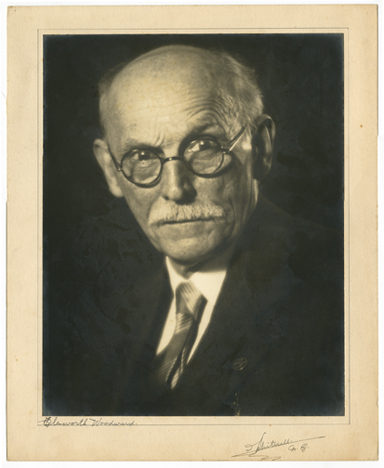 Ellsworth Woodward (July 14, 1861 - February 28, 1939) was born on July 14, 1861, in Seekonk, Bristol County, Massachusetts, and passed away on February 28, 1939, in New
Orleans, Louisiana, where he was subsequently laid to rest in Metairie Cemetery. Throughout his adult life, he was married to Mary Bell Johnson Woodward. During the late
19th and early 20th centuries, Ellsworth and his older brother, William Woodward, emerged as two of the most influential figures in Southern art. Following a visit to the
1876 Philadelphia Centennial Exposition, the brothers pursued artistic paths, leading Ellsworth to study at the Rhode Island School of Design and later abroad in Munich
under instructors such as Carl von Marr, Samuel Richards, and Richard Fehr. In 1885, Ellsworth relocated to New Orleans to join his brother on the art faculty at Tulane
University, and two years later, he began his long tenure as a professor of art at Sophie Newcomb College, eventually serving as director of its art department from 1890
until his retirement in 1931.
Ellsworth Woodward (July 14, 1861 - February 28, 1939) was born on July 14, 1861, in Seekonk, Bristol County, Massachusetts, and passed away on February 28, 1939, in New
Orleans, Louisiana, where he was subsequently laid to rest in Metairie Cemetery. Throughout his adult life, he was married to Mary Bell Johnson Woodward. During the late
19th and early 20th centuries, Ellsworth and his older brother, William Woodward, emerged as two of the most influential figures in Southern art. Following a visit to the
1876 Philadelphia Centennial Exposition, the brothers pursued artistic paths, leading Ellsworth to study at the Rhode Island School of Design and later abroad in Munich
under instructors such as Carl von Marr, Samuel Richards, and Richard Fehr. In 1885, Ellsworth relocated to New Orleans to join his brother on the art faculty at Tulane
University, and two years later, he began his long tenure as a professor of art at Sophie Newcomb College, eventually serving as director of its art department from 1890
until his retirement in 1931.
Deeply influenced by the ideals of the Arts and Crafts movement, Woodward grew concerned about the effects of industrialization and machine manufacturing on aesthetics,
advocating instead for social uplift through handcrafted objects for everyday use. He famously asserted that art and handicraft are Siamese twins and emphasized the primacy
of locale, believing that only people raised in a specific place could adequately convey its natural beauty. To institutionalize this vision, he founded Newcomb Pottery on
the Newcomb campus in 1895, combining local St. Tammany Parish clay with designs created by Southern women featuring regional motifs like oranges, palms, magnolias, and oak
trees. Under his tutelage and with assistants such as Joseph Meyer, George Ohr, Mary Sheerer, and Paul Cox, Newcomb Pottery gained world renown, winning a Gold Prize at the
Jamestown, New York arts and crafts fair in 1907 and five separate awards at the 1915 Panama-Pacific Exhibition in San Francisco to become the second-largest producer of
individually decorated pottery in America. Although international acclaim eventually pressured the enterprise into faster production and turned its wares into elite
collector items, Woodward's foundational role remained secure.
As a teacher, artist, and promoter, Woodward was a cornerstone of the New Orleans art scene between 1890 and 1940. He painted in an impressionist style all his life,
specializing in landscape-structure, genre scenes, and etchings such as his French Quarter corner painting, Ursuline and Chartres. Beyond his classroom influence, his
institution-building legacy included establishing the New Orleans Art Association in 1900, chairing the art committee at the newly established Isaac Delgado Museum of Art
and serving as its president starting in 1924, and cofounding the Southern States Art League in 1920. Two years after his retirement, amid the Great Depression in 1933, he
accepted an appointment as a regional director of the Public Works of Art Project, overseeing Region Six artists in Louisiana, Arkansas, Mississippi, and Alabama while
balancing the tension between aiding needy artists and maintaining strict standards of excellence. Woodward's artwork is preserved in numerous prominent institutions,
including the Charleston Museum, the Brooklyn Museum of Art, Louisiana State Museum, LSU Museum of Art, Lauren Rogers Museum of Art, Morris Museum of Art, Museum of Fine
Arts, Houston, Ogden Museum of Southern Art, and the Newcomb Art Gallery. An interesting modern discovery occurred in 2009 when a Goodwill Industries employee in Nashville,
Tennessee, rescued a discarded Woodward painting from a trash bin, which was subsequently auctioned online for $8,000.
While Ellsworth Woodward’s life intersected with the rich, bohemian, and diverse cultural tapestry of historical New Orleans—an environment historically noted for
welcoming alternative lifestyles and subcultures—scholarly documentation directly connecting him to personal LGBTQ+ identity or networks is limited. However, his
professional realm within the early-to-mid 20th-century New Orleans art scene, including the broader cultural networks he helped foster, frequently provided creative
sanctuary for many avant-garde and queer artists drawn to the city's distinct Creole and romanticized heritage.
In 1926 Pelican Bookshop Press, New Orleans, published "William Spratling and William Faulkner, Sherwood Anderson and Other Famous Creoles: A Gallery of Contemporary New Orleans",
issued in 250 copies. The “Famous Creoles” (with ages in 1926) were
- Conrad Albrizio, 27, New York-born, serious artist, Spratling’s neighbor, Arts and Crafts Club stalwart
- Sherwood Anderson, 50, “Lion of the Latin Quarter,” eminence gris, generous to respectful younger writers (LGBTQ friendly)
- Marc Antony and Lucille Godchaux Antony, both 28, Love-match between heiress and lower-middle-class boy, local artists
- Hamilton “Ham” Basso, 22, Star-struck recent Tulane grad, aspiring writer, good dancer (LGBTQ friendly)
- Charles “Uncle Charlie” Bein, 35, Director of Arts and Crafts Club’s art school; lived with mother, sister, and aunt (GAY)
- Frans Blom, 33, Danish archeologist of Maya, Tulane professor, colorful resident of Quarter
- Roark Bradford, 30, Newspaperman, jokester, hit pay dirt with Negro dialect stories
- Nathaniel Cortlandt Curtis, 45, Tulane architecture professor, preservationist, recorded old buildings
- Albert Bledsoe Dinwiddie, 55, President of Tulane, Presbyterian
- Marian Draper, 20, Ziegfeld Follies alum, Tulane cheerleader, prize-winning architecture student
- Caroline “Carrie” Wogan Durieux, 30, Genuine Creole, talented artist living in Cuba and Mexico, painted by Rivera
- William “Bill” Faulkner, 29, Needs no introduction, but wrote the one to Famous Creoles (LGBTQ friendly)
- Flo Field, 50, French Quarter guide, ex-journalist, sometime playwright, single mother
- Louis Andrews Fischer, 25, Gender-bending Mardi Gras designer, named for her father (LGBTQ friendly)
- Meigs O. Frost, 44, Reporter’s reporter; lived in Quarter; covered crime, revolutions, and arts
- Samuel Louis “Sam” Gilmore, 27, Greenery-yallery poet and playwright, from prominent family (GAY)
- Moise Goldstein, 44, Versatile and successful architect, preservationist, active in Arts and Crafts Club
- Weeks Hall, 32, Master of and slave to Shadows-on-the-Teche plantation, painter, deeply strange (GAY)
- Ronald Hargrave, 44, Painter from Illinois formerly active in Quarter art scene, relocated to Majorca
- R. Emmet Kennedy, 49, Working-class Irish boy, collected and performed Negro songs and stories
- Grace King, 74, Grande dame of local color literature and no-fault history, salonnière
- Alberta Kinsey, 51, Quaker spinster, Quarter pioneer, indefatigable painter of courtyards
- Richard Ray Kirk, 49, Tulane English professor and poet, loyal Michigan Wolverine alumnus
- Oliver La Farge, 25, New England Brahmin, Tulane anthropologist and fiction-writer, liked a party
- Harold Levy, 32, Musician who ran family’s box factory, knew everybody, turned up everywhere
- Lillian Friend Marcus, 35, Young widow from wealthy family, angel and manager of Double Dealer (LGBTQ friendly)
- John “Jack” McClure, 33, Poet, newspaper columnist and reviewer, Double Dealer editor, bookshop owner
- Virginia Parker Nagle, 29, Promising artist, governor’s niece, Arts and Crafts Club teacher
- Louise Jonas “Mother” Nixon, 70, A founder of Le Petit Theatre and its president-for-life, well-connected widow
- William C. “Cicero” Odiorne, 45, Louche photographer, Famous Creoles’ Paris contact (GAY)
- Frederick “Freddie” Oechsner, 24, Recent Tulane graduate, ambitious cub reporter, amateur actor
- Genevieve “Jenny” Pitot, 25, Old-family Creole, classical pianist living in New York, party girl
- Lyle Saxon, 35, Journalist, raconteur, bon vivant, host, preservationist, bachelor (GAY)
- Helen Pitkin Schertz, 56, Clubwoman, civic activist, French Quarter guide, writer, harpist
- Natalie Scott, 36, Journalist, equestrian, real-estate investor, Junior Leaguer, social organizer (LGBTQ friendly)
- William “Bill” Spratling, 25, Famous Creoles illustrator, Tulane teacher, lynchpin of Quarter social life (GAY)
- Keith Temple, 27, Australian editorial cartoonist, artist, sometimes pretended to be a bishop
- Fanny Craig Ventadour, 29, Painter, Arts and Crafts Club regular, lately married and living in France
- Elizebeth Werlein, 39, Suffragette with colorful past, crusading preservationist, businessman’s widow
- Joseph Woodson “Pops” Whitesell, 50, Photographic jack-of-all-trades, French Quarter eccentric, inventor (GAY)
- Daniel “Dan” Whitney, 32, Arts and Crafts Club teacher, married (two) students, beauty pageant judge
- Ellsworth Woodward, 65, Artistic elder statesman, old-fashioned founder of Newcomb art department
References:
Other references:
- 64 Parishes (Louisiana Endowment for the Humanities): Features a comprehensive historical profile chronicling his role as a pillar of the New Orleans art scene, his direction of Newcomb Pottery, and his administrative leadership.
- The Johnson Collection, LLC: Maintains an extensive biographical overview detailing his artistic training at the Rhode Island School of Design and in Munich, his educational contributions at Tulane University and Sophie Newcomb College, and his presidency of the Southern States Art League.
- Louisiana State Museum Collections: Documents his works on paper, architectural sketches (such as Madame John's Legacy and Ursuline and Chartres), and his collaborative regional preservation efforts alongside his brother William Woodward.
- Wikipedia & Wikimedia Commons: Compiles core encyclopedic timelines, institutional collections (including the Ogden Museum of Southern Art, the Brooklyn Museum, and the Morris Museum of Art), and historical photographs/media associated with his life.
- New Orleans Public Library and Tulane University Special Collections: Primary archival repositories holding historical records regarding Newcomb College, the Arts and Crafts Club of New Orleans, and his tenure as president of the Isaac Delgado Museum of Art (now the New Orleans Museum of Art).
Support this project
This website is a passion project researched, developed, and funded entirely by me. If you find the content valuable and would like to help support the ongoing research and hosting costs, any contribution is deeply appreciated.
Thank you for keeping this independent resource alive!
My books on Amazon: Elisa Rolle's books
BACK TO HOME PAGE
